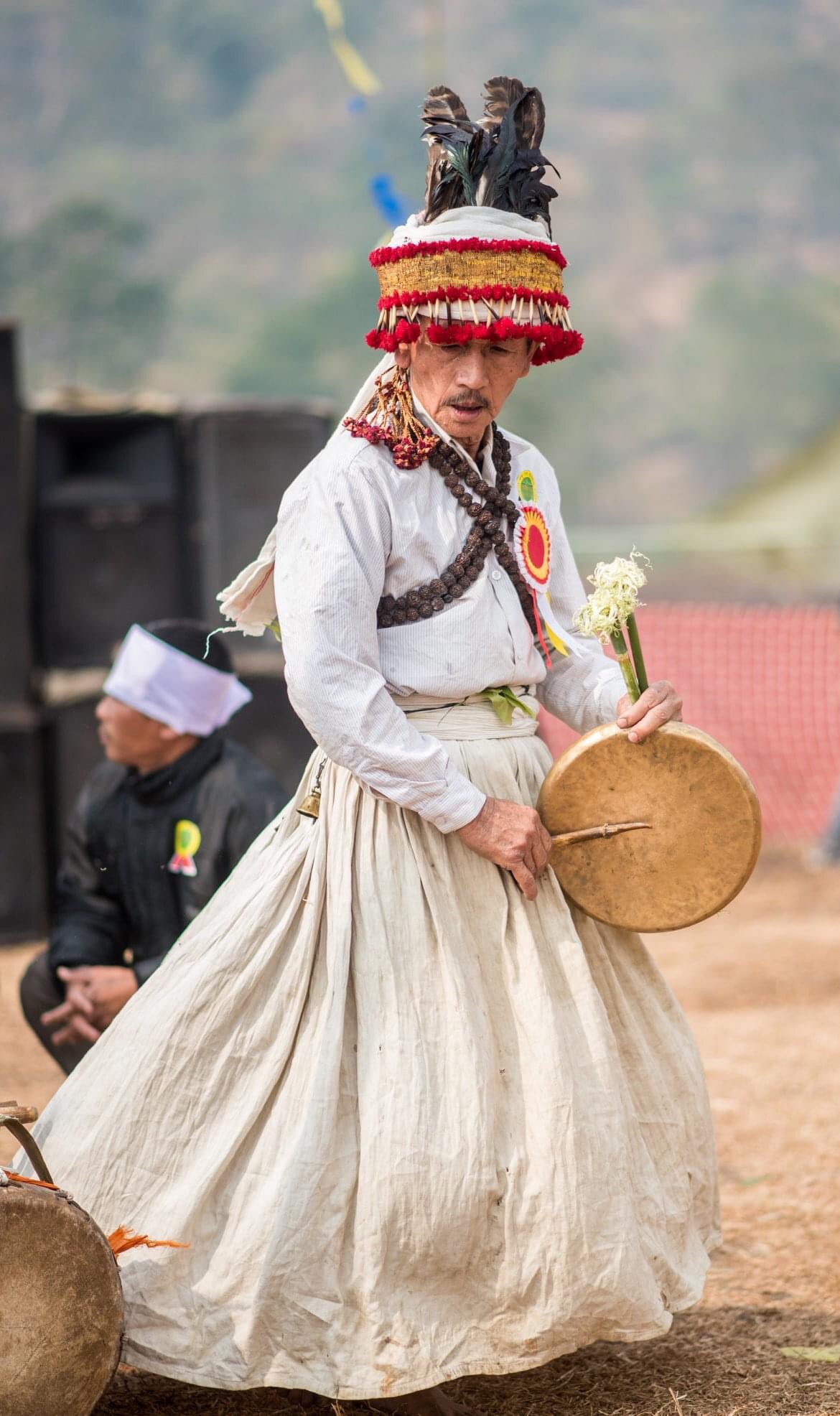
The Rai Priest — Nakchhong, Mangpa, or Bijuwa
Role and Responsibilities
The traditional Rai priest serves multiple crucial functions:
- Ritual ceremonies: The priest leads all major rituals including birth ceremonies, marriage ceremonies, death rituals, and festivals.
- Mundhum recitation: The priest is the custodian of the Mundhum — the sacred texts and oral traditions. He recites the appropriate texts for each occasion.
- Sacred site oversight: The priest manages and conducts rituals at sacred sites (Chinlung, Suptulung, and other nature worship sites).
- Divination and guidance: The priest provides spiritual guidance, reads omens, and helps community members navigate important decisions.
- Conflict resolution: Traditionally, the priest played a role in resolving community disputes through spiritual and customary means.
Selection and Lineage
The position of priest is typically hereditary — passed down through specific families or lineages within the community. The training involves years of learning the Mundhum, rituals, and spiritual practices from elders and predecessors.
Variations across Rai groups
Different Rai subgroups use different terms for their priests:
- Nakchhong: Used in many Rai communities, especially Khambu
- Mangpa: Used in some Rai communities
- Bijuwa: Used in other Rai communities
These variations reflect the linguistic and cultural diversity within the Rai community.