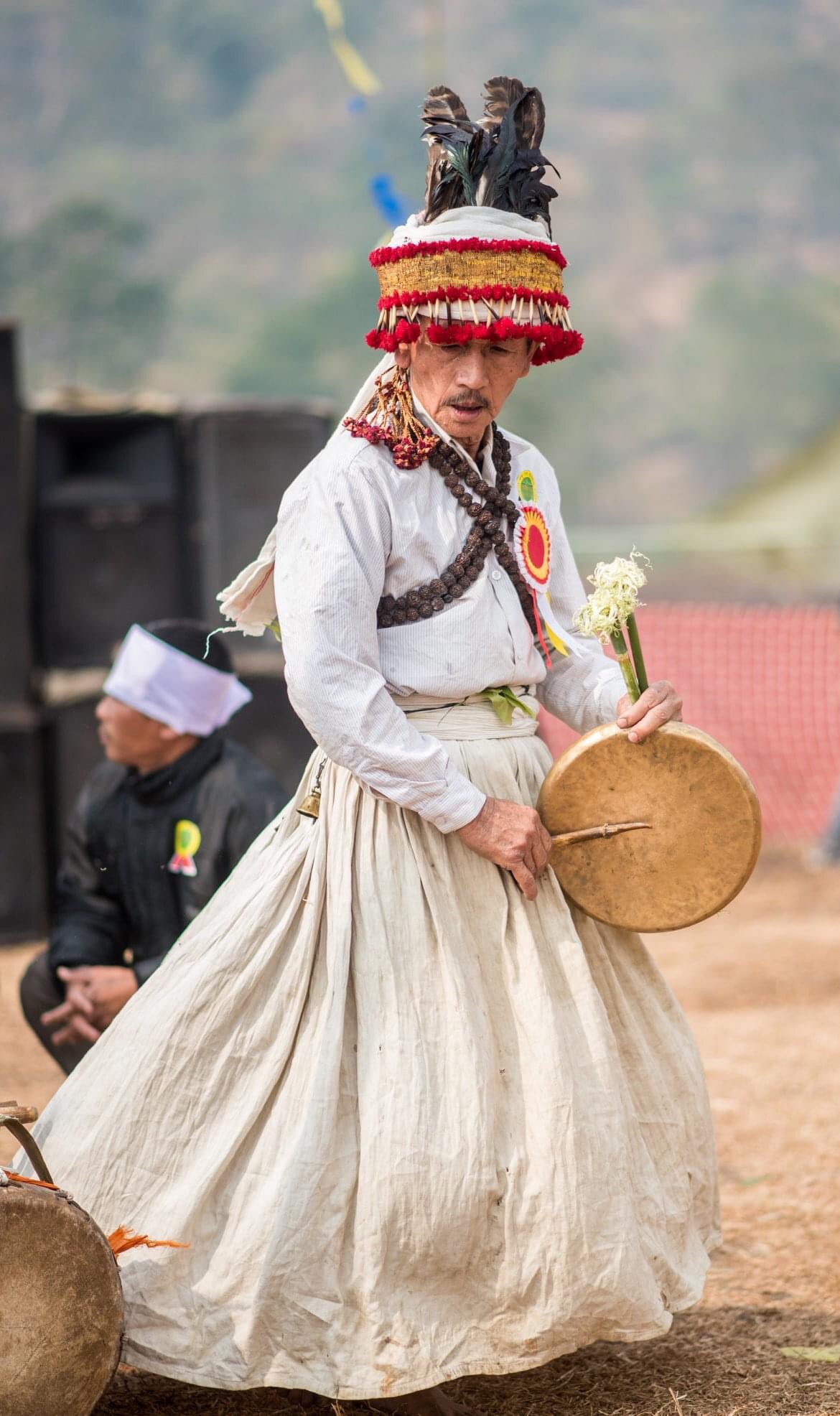
What is Kirat Mundhum?
The Kirat Mundhum (also spelled Mundhum) is the sacred scripture and oral tradition of the Kirat people. The word 'Mundhum' literally means 'the power of great strength' in the Limbu language, and similar terms exist across Kirat languages — Muddum (Mewahang), Mintum (Yakkha), Mukdum (Sunuwar), Ridum (Kulung), Mundum (Bantawa), and Mudum (Chamling).
Key aspects of the Mundhum:
- Oral tradition: The Mundhum has been primarily transmitted orally from generation to generation, with priests (Nakshatra/Mangpa/Bijuwa) serving as the custodians of this knowledge.
- Comprehensive guide: It covers all aspects of life — birth, marriage, death, agriculture, architecture, politics, and spirituality.
- Customary law: The Mundhum serves as customary law, guiding the daily lives and social organization of the Kirat people.
- Distinct for each tribe: Each Kirat tribe has its own version of the Mundhum, which differentiates them from other Kirat groups and non-Kiratis.
The Four Kirat Scriptures:
The four major Kirat groups each have their distinct religious texts:
- Khambu (Rai): Mundum
- Limbu (Subba): Mundhum (the most well-documented)
- Sunuwar (Mukhia): Mukdum
- Yakkha (Dewan): Mintum
The Mundhum is not just a religious text — it is the foundation of Kirat identity, culture, and worldview. It embodies the wisdom of generations and continues to guide the spiritual life of the Kirat people today.