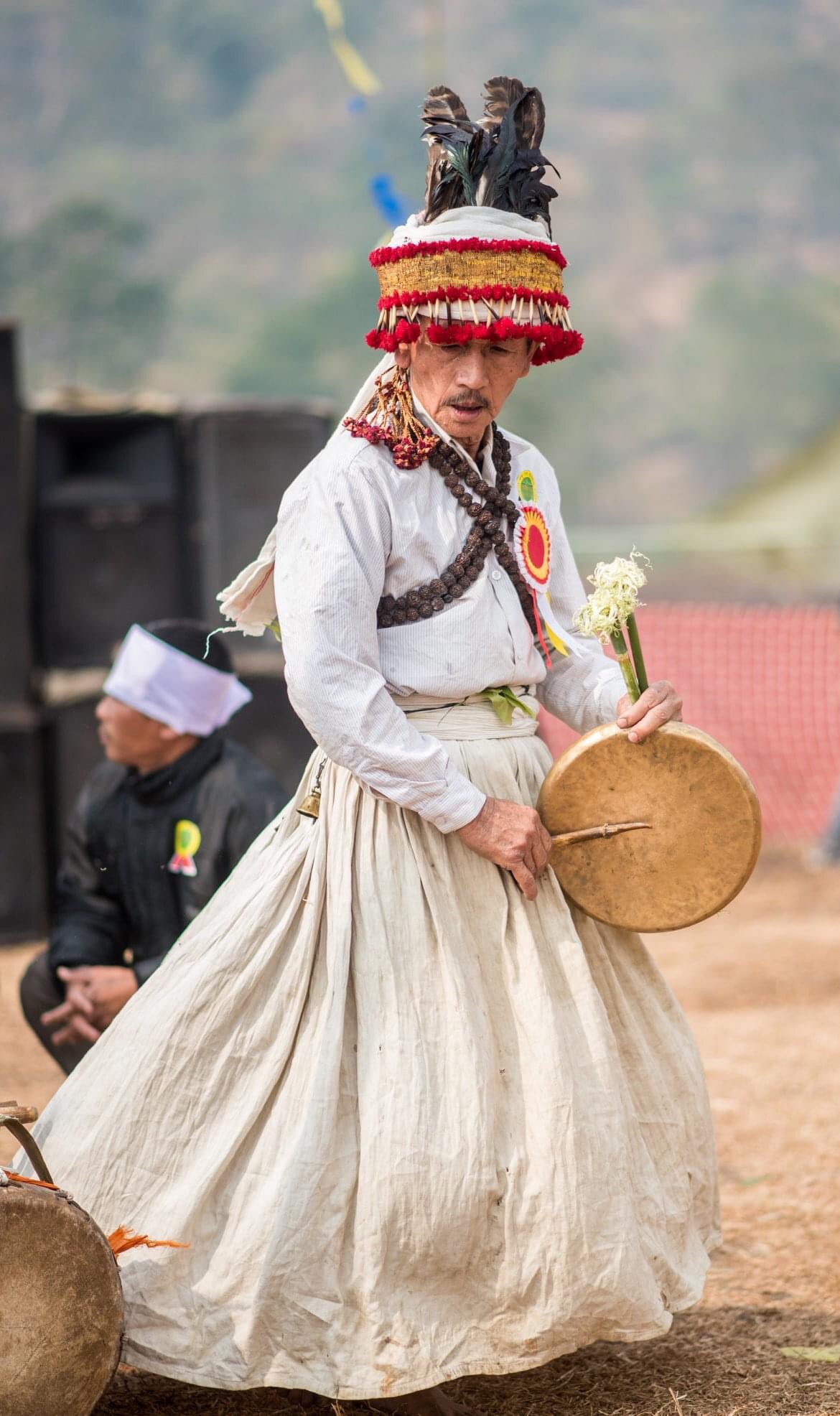
Kirat Rai Shamanic Tradition
What is Shamanism in the Kirat Context?
Shamanism in the Kirat Rai tradition is a form of spiritual practice that emphasizes direct experience and communication with the spirit world. Unlike organized religions with centralized authority, shamanism is practical and community-based — addressing the immediate needs and concerns of the people.
Key Practices
- Spirit communication: The shaman enters altered states of consciousness (through drumming, chanting, dancing, or other techniques) to communicate with spirits, deities, and ancestral beings.
- Healing: Traditional healing rituals address both physical and spiritual ailments. Illness is often understood as a spiritual imbalance or the result of spirit interference.
- Divination: The shaman reads omens, interprets dreams, and provides guidance about future events or the causes of problems.
- Ritual performances: Shamans perform specific rituals for specific purposes — ensuring good harvests, protecting the community, blessing new homes, etc.
- Ancestor veneration: Communication with ancestral spirits is an important aspect of Kirat shamanism. Ancestors are believed to continue influencing the lives of their descendants.
The Role of the Shaman
In the Kirat Rai community, the shaman (who may also be the Nakchhong in many cases) serves as:
- Healer: Treating illnesses through spiritual and herbal methods.
- Mediator: Bridging the human and spirit worlds.
- Guide: Helping individuals and the community navigate spiritual and life challenges.
- Custodian of tradition: Preserving and transmitting the oral traditions, rituals, and knowledge of the community.
Modern Context
While many Rai people have adopted Hinduism, Buddhism, or Christianity, the shamanic traditions continue to be practiced, especially in rural areas and during important cultural ceremonies. The Sakela festival, for example, retains strong shamanic elements. Many Rai people practice a syncretic blend of traditional and adopted religions.