Traditional Rai Clothing and Attire
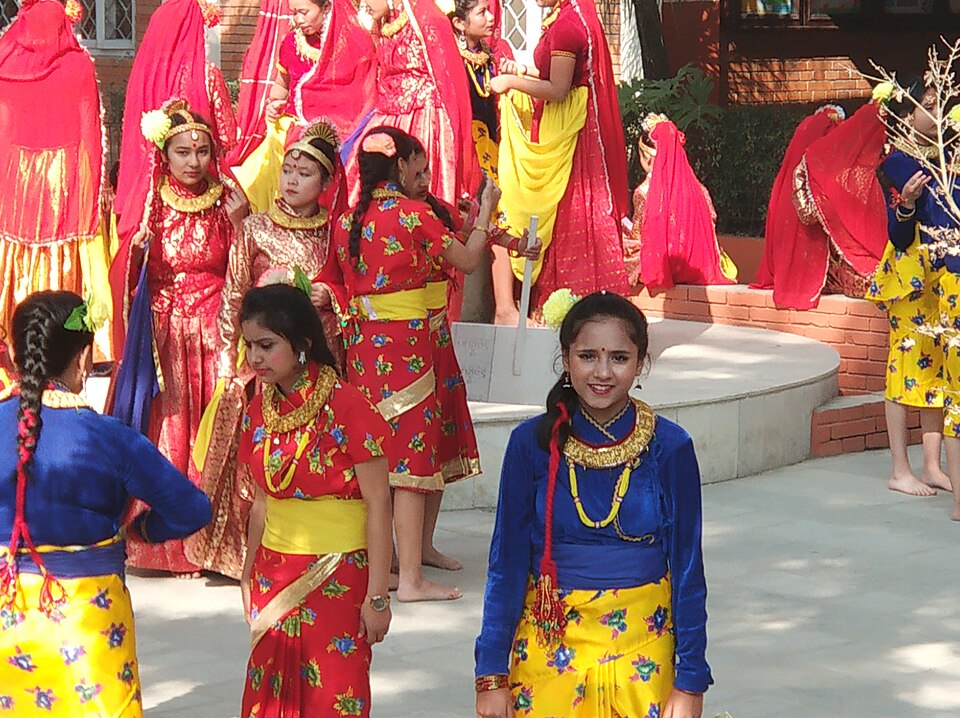
The traditional clothing of the Rai people reflects their cultural identity, climate, and social traditions. Rai attire varies by subgroup, gender, and occasion, but shares common elements that mark it as distinctly Kirat.
Women's Traditional Attire
- Pachhat (Dhunge): A wrapped skirt made of cotton or silk, often with distinctive patterns and colors. The pachhat is wrapped around the waist and secured with a knot. Different subgroups have different styles and patterns.
- Topi (Headband): A traditional headband or turban worn by women during special occasions. It is often made of woven cloth and decorated with patterns.
- Blouse: A fitted blouse worn over the pachhat, often made of matching fabric.
- Ornaments: Traditional Rai women wear a variety of ornaments including silver necklaces, bangles, earrings, and waist belts. These ornaments are often intricately designed and hold cultural significance.
- Wedding attire: For weddings and special ceremonies, Rai women wear particularly elaborate clothing with rich fabrics, bright colors, and extensive jewelry.
Men's Traditional Attire
- Dhotis: Traditional wrapped trousers made of cotton, often white or cream-colored.
- Kurtas: Traditional shirts or tunics worn over the dhotis.
- Cholo (vest): A traditional vest worn over the kurta, often made of wool or thick cotton.
- Patuka (waistband): A woven waistband worn around the waist, often with distinctive patterns.
- Headband: Men also wear traditional headbands during special occasions.
Significance of Colors and Patterns
The colors and patterns used in Rai clothing carry cultural significance:
- Red: Often associated with auspicious occasions, weddings, and festivals.
- Black and white: Used in everyday and ceremonial contexts, with specific meanings in different contexts.
- Patterns: Geometric patterns, especially those woven into cloth, often have symbolic meanings related to nature, spirituality, and community.
Modern Context
While traditional clothing is still worn during festivals, ceremonies, and cultural events, daily wear for most Rai people consists of modern clothing. However, the traditional attire remains an important symbol of cultural identity and is proudly worn during cultural celebrations.